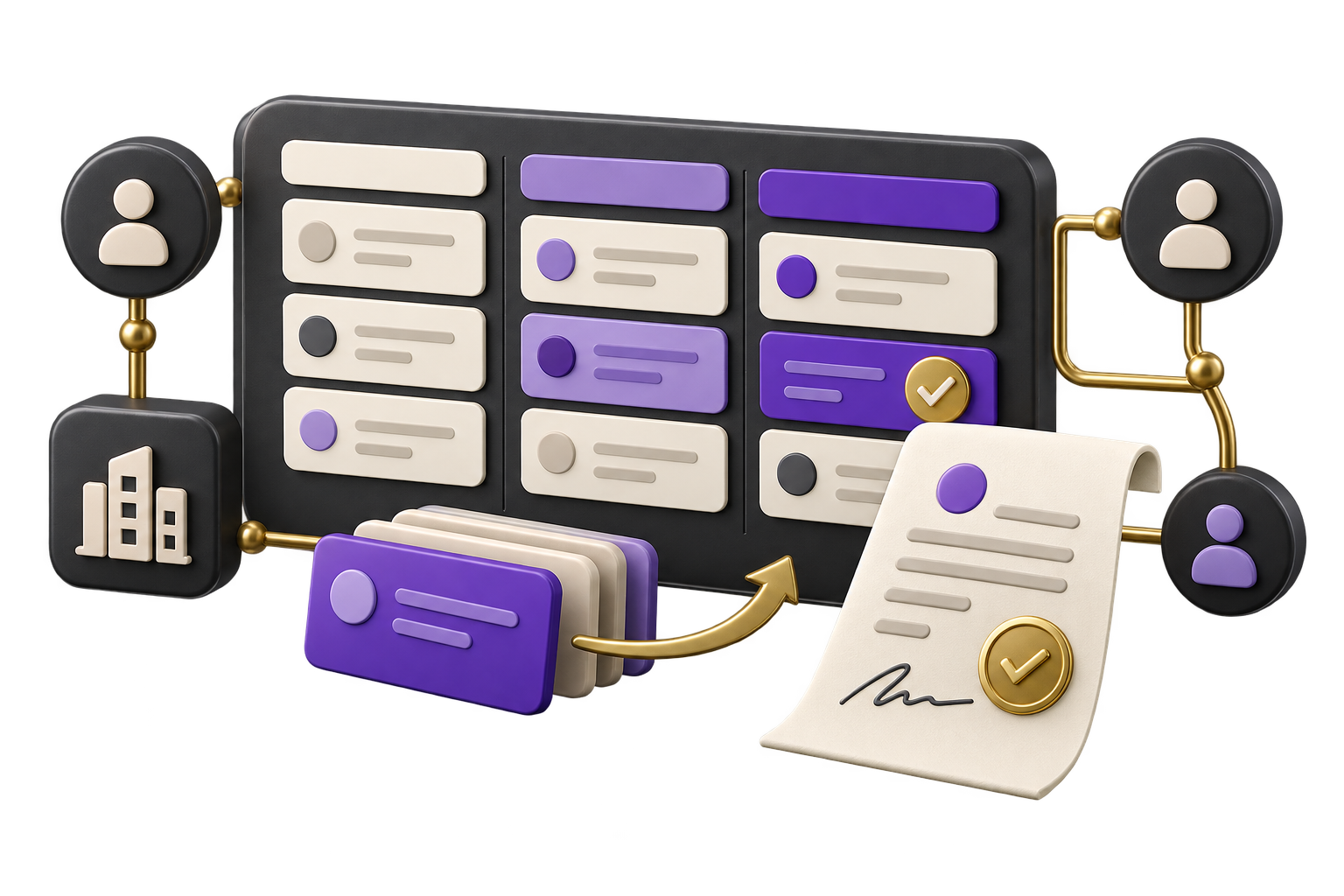
Catalogue and variant model
Define product families, attributes, media, buyer references, units, pack rules and the source and owner of each field.

GreyBath helps Tiruppur apparel teams design B2B catalogue and order workflows that keep styles, variants, samples, approvals and fulfilment evidence connected.
Map one wholesale order
01 / What we build
Define product families, attributes, media, buyer references, units, pack rules and the source and owner of each field.
Prototype search, shortlisting, sample or quote requests, approvals, purchase-order capture and role-limited buyer views.
Define reservations, promised dates, split dispatches, documents, returns, quality evidence, owners and escalation states.
City context, honestly stated
Tiruppur district is widely associated with textile and apparel activity. That context informs this workflow, but GreyBath claims no local office, client, export relationship or commercial outcome.
Keep style, colour, size, fabric, pack and buyer-specific references connected instead of rebuilding them in each quotation.
Show whether a selection is a sample, approved style, ready stock, planned production or unavailable rather than presenting one misleading stock number.
Link quotes, purchase orders, artwork or sample approvals, reservations, dispatch evidence and quality or return cases.
02 / Where it fits
The first scope should use representative approved product and order data. It does not assume every Tiruppur business exports or that an online store replaces buyer review.
Present approved ranges and capture buyer requirements without flattening production and availability states.
Review variants, samples, documents, changes and order status through accountable roles.
Manage customer-specific catalogues, pack rules, quotes and repeat ordering where policy allows.
Trace reservations, dispatches, shortages, returns and next actions from a shared order identity.
03 / How we work
Follow one style family from source data through sample or quote, approval, order, reservation and dispatch.
Test variants, permissions, exceptions, documents and mobile use with representative scenarios.
Launch locally with approved data, verify hand-offs and support load, then decide whether expansion is justified.
Scope follows the product model, selling mode, buyer roles, commercial approvals, inventory source, fulfilment partners, returns policy, integrations and accountable owners.
Discuss your projectStyles, variants, units, packs, samples, MOQ or quote policy, price visibility, buyer groups and approval ownership.
Where approved availability, reservations, production status, orders, payments, documents and dispatch events originate.
Media rights, material or certification claims, access, integrations, retention, analytics, environments and rollback.
Not necessarily. The right flow may be catalogue plus enquiry, sample request, quotation, buyer approval or account-based ordering rather than instant checkout.
Only when an authorised source provides suitable, timely availability data and the meaning of ready, reserved and production stock is explicit.
No. GreyBath can improve approved product information and workflows, but traffic, buyer demand, orders and commercial outcomes cannot be guaranteed.
Yes when identity, account mapping, approval, cache, export and fallback rules are designed and tested. Sensitive pricing should not leak through public pages or predictable links.
Potentially, through supported interfaces after the authoritative fields, update timing, error handling, reconciliation and ownership are agreed.
Styles, samples and order updates are scattered across sheets and messages?