Set and piece catalogue
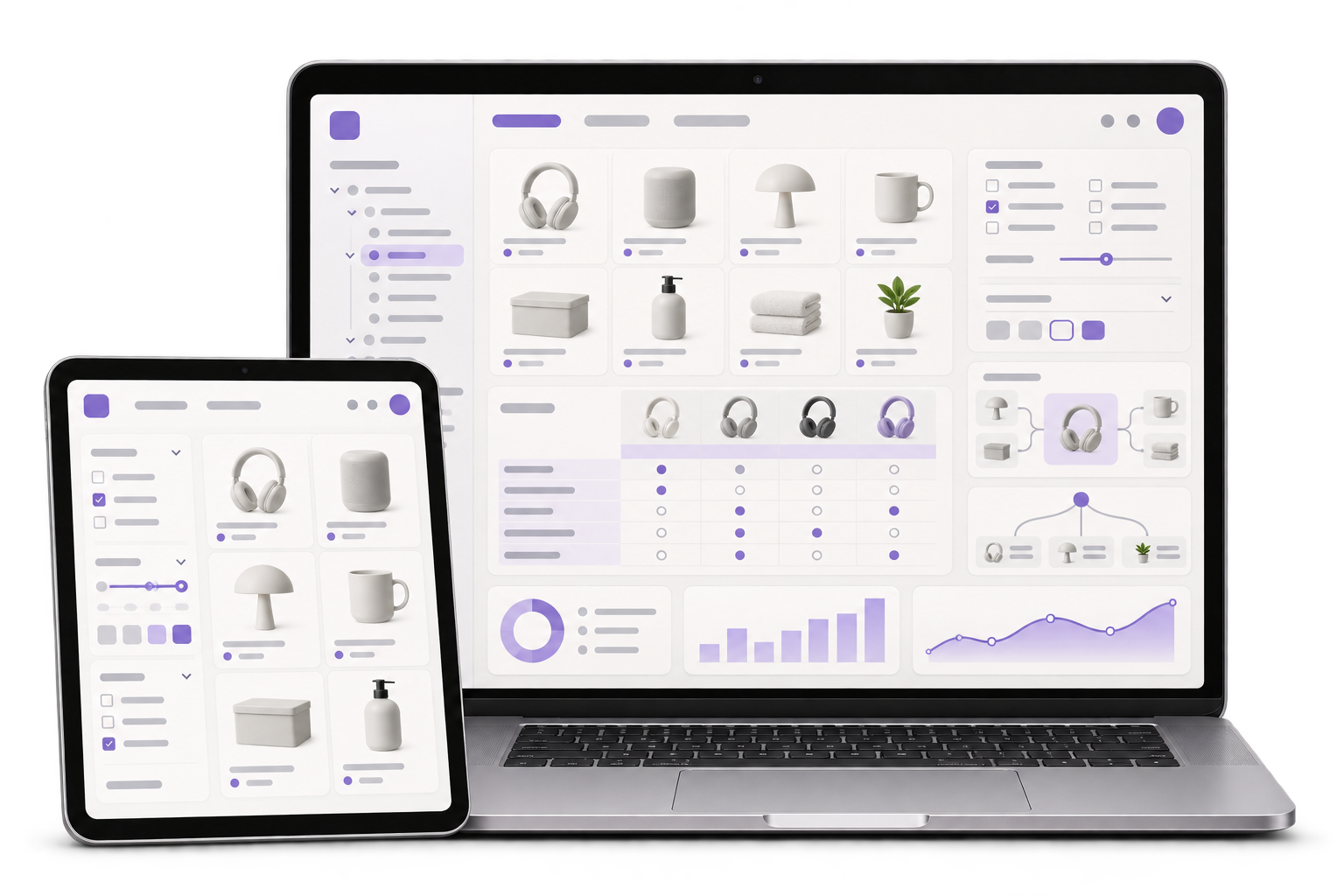
Model the centre hanging, mirrored panels and available colours. Give each arrangement its own photo, assembled width and box contents so staff can edit the catalogue without introducing contradictions.

A photograph of a full beadwork arrangement can make a single piece look like a set. GreyBath develops storefronts that show exactly what a buyer selected, where matching pieces fit and what a packer needs to send. Start with one listing customers often ask you to explain.
See the three-piece catalogue example
01 / What we build
Model the centre hanging, mirrored panels and available colours. Give each arrangement its own photo, assembled width and box contents so staff can edit the catalogue without introducing contradictions.
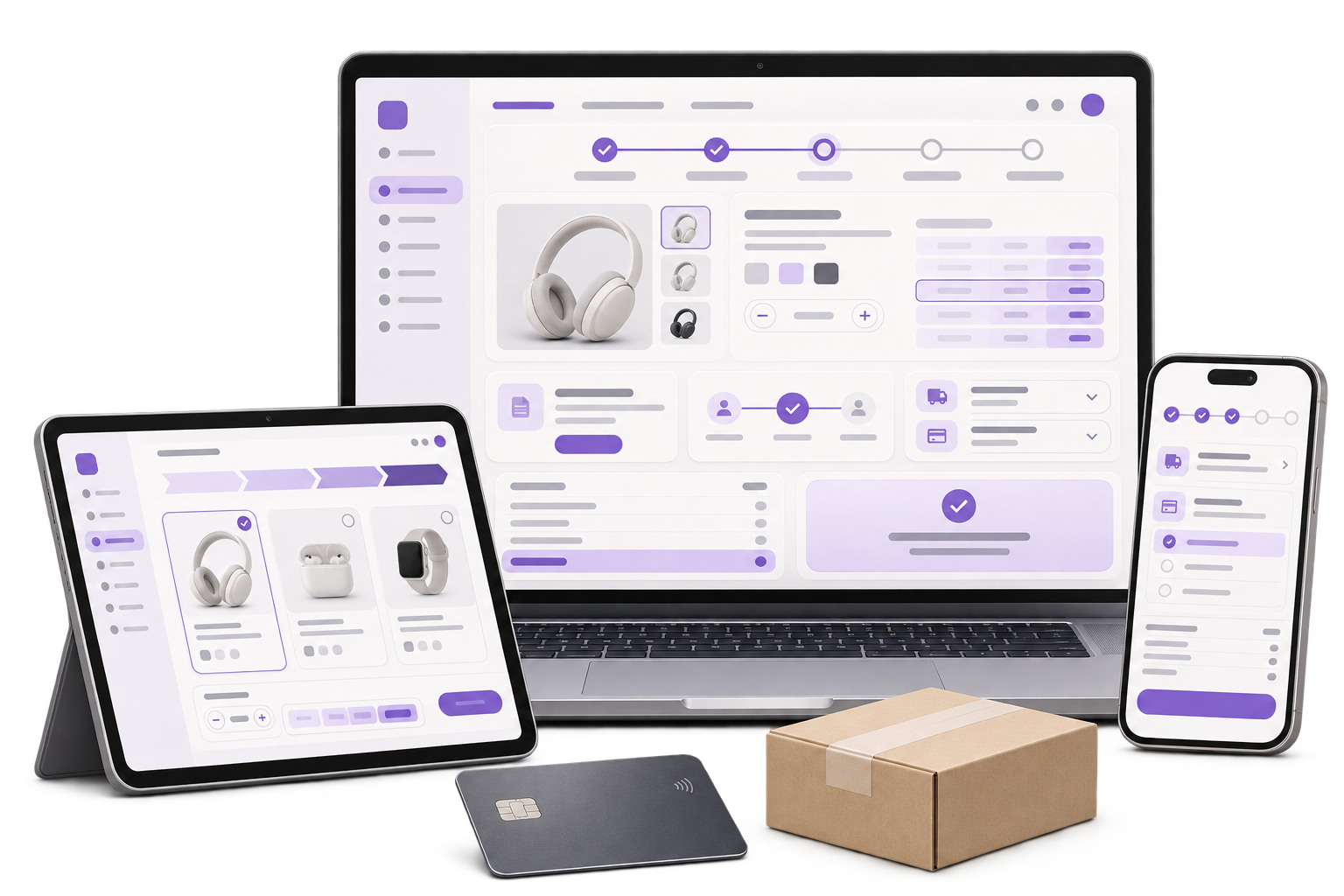
Show selected pieces with a text summary beside the image. Keep the choice in the cart and confirmation, including after a shopper edits quantity or returns to the listing.
Send the actual component list and orientation to the packer. Give customer support the order’s saved description and a way to flag a proposed change for buyer approval.
City context, honestly stated
Gujarat Tourism describes beadwork in Junagadh and identifies household decoration among the forms it takes. The arrangement below is a fictional catalogue example for a seller of decorative beadwork. GreyBath delivers remotely.
Imagine a beadwork doorway display with a 60 cm centre hanging, a 15 cm panel on each side and a cloth backdrop used in the photograph. Show the 60 cm centre hanging and the 90 cm three-piece set as two selectable arrangements. Label the example dimensions and explain that the backdrop is a photo prop.
Show which motif faces left and which faces right when a person stands in front of the display. Offer a simple diagram and a written box list that both update with the selection. Make the centre-only view show one item, and make the full arrangement show one centre hanging and two mirrored side panels.
In the full-set trial order, carry the blue colour choice and the three named pieces into the confirmation and packing list. If the catalogue later renames blue or revises a photo, the order still describes what was offered at purchase. When a matching piece is unavailable, the seller can contact the buyer before changing the set.
Where it fits
For a small catalogue, two well-labelled listings can do the job. A shared component model is worth scoping when colours recur across several arrangements and staff otherwise have to maintain duplicate descriptions or packing instructions.
Separate a complete doorway display from the pieces and props styled around it. Set usable widths from your own measurements.
Update photos, arrangement names and box contents together. Use colour names in text as well as photos or swatches.
Read one clear pack list with the centre piece, side orientation and colour. Flag a mismatch before dispatch.
Open the contents sold at the time of purchase so a missing-piece question can be resolved from the original offer.
How we work
Choose a centre hanging by keyboard or screen reader and verify the one-piece contents, width and prop exclusion are clear in text.
Select the matching pair, add two sets and check that cart and packing preview describe two centre pieces and four side panels in total.
Rename the displayed colour, then confirm the trial order keeps its original colour and contents. Ask the packer to flag one missing right-facing panel.
Pick a single photographed arrangement for the pilot. Supply actual piece dimensions, which pieces can be paired and who approves substitutions. Confirm the matching rules and the language used to describe each arrangement before importing a large catalogue.
Discuss your projectDecide how to measure assembled width and whether the individual widths, gaps or mounting instructions need a separate note.
Agree which photographs represent each choice, how to name colours and the viewing direction used to label mirrored pieces.
Specify the piece identifiers, order snapshot and packing list that your existing fulfilment process can handle.
Yes. Caption which arrangement it shows and list any styling props separately. Show or label the centre-only view when that choice is active.
Only if you offer it separately. A piece can have an internal identifier for the packing list while appearing to shoppers solely in the arrangement.
Define the viewing direction with plain text and illustrate it in a simple diagram. The complete set can include both sides without making buyers choose two separate options.
Discovery can check whether its product variants, bundle rules and order exports carry enough detail for the example before scoping a rebuild.
Use one listing photo, a measured box list and a sample order where the shopper chose a different arrangement from the main image.
A clear box contents list starts on the product page.