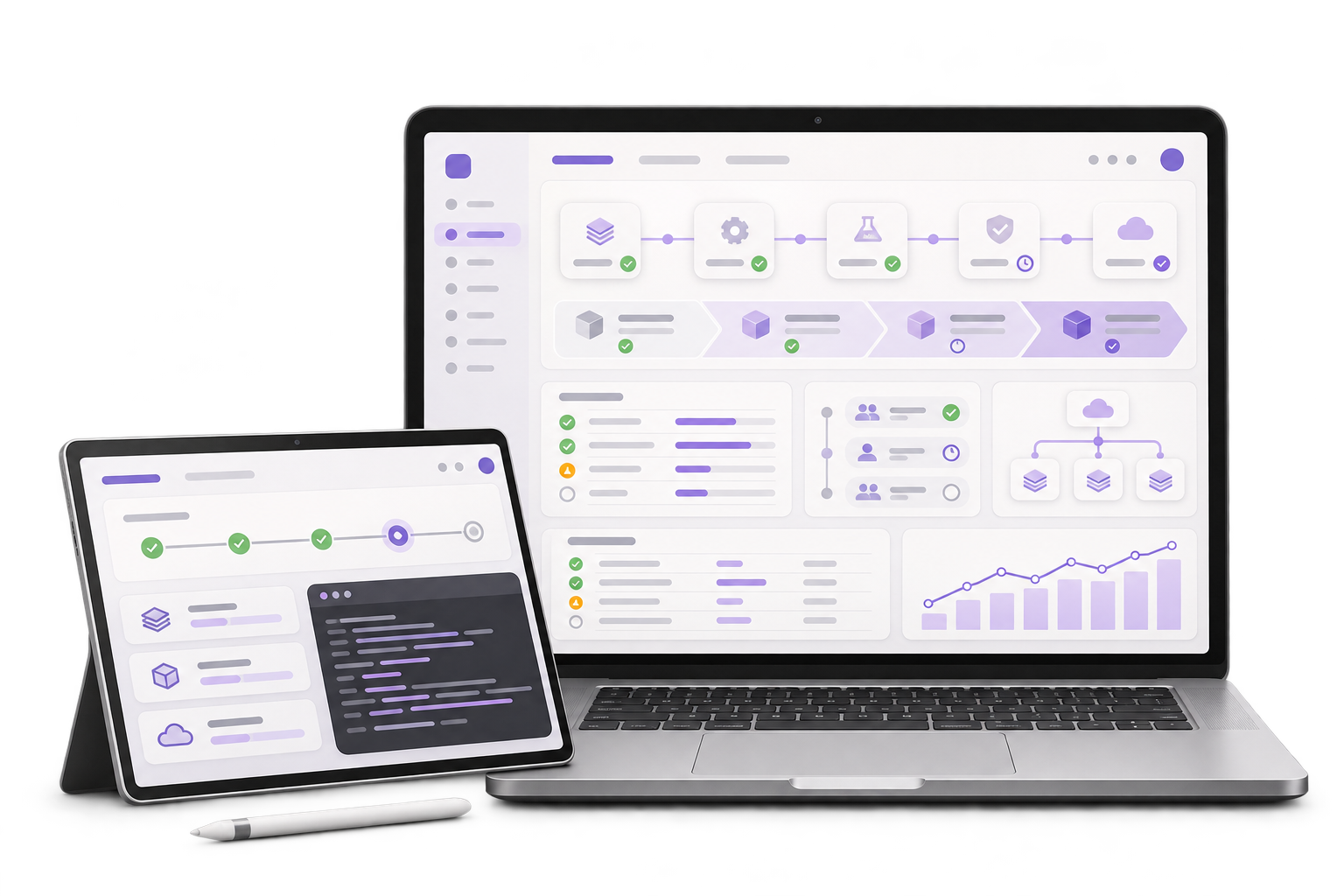
Export and hosting dependency map
Map the schedule, application, queue, file worker, private storage and delivery step. Identify where requested format, job reference and file completion are recorded.

A scheduled CSV may be picked up by another system before support is online. GreyBath can help the release team keep export jobs traceable when an app and its background worker change.
See the export rehearsal
01 / What we build
Map the schedule, application, queue, file worker, private storage and delivery step. Identify where requested format, job reference and file completion are recorded.
Prepare a staged test for v1 queued before the deploy and v2 queued after it. Compare headers, row counts and one controlled retry with the consuming system’s expectations.
Give support a way to look up pending jobs and completed files using approved references. Rehearse a pause and document who verifies compatibility before restoring traffic.
City context, honestly stated
Software Technology Parks of India describes Bengaluru’s Electronics City as a software and technology cluster. This fictional Bengaluru product team uses a scheduled export consumed by a customer’s reporting tool. GreyBath delivers cloud and DevOps work remotely.
The fictional customer expects a v1 CSV with six columns. A release adds a seventh field to v2. A scheduled v1 export enters the queue before deployment starts. Include the requested format with the job so the updated worker can produce the original file when it picks that job up.
In staging, the worker writes the report to a private staging location and then loses its connection before recording success. Use a stable job reference to reconcile the retry. Verify the customer is offered one finished report with the intended columns and that the activity log shows which job completed.
Before switching the rest of the workload, ask the consuming system owner to import one v1 sample and one explicitly requested v2 sample. Pause if a header check fails or older queued jobs cannot complete. Record which export jobs still need a decision.
Where it fits
Include the release owner and a person who uses the file, alongside the engineers who maintain the reporting worker.
Identify the export customers rely on and agree the old format support window before changing the columns.
Map current workers and queue settings, and review rollout order, capacity and observable completion signals.
Review sample headers and one synthetic import. Explain what their side expects when a file is delayed.
Find the reference associated with a delayed file and escalate the decision using an agreed owner.
How we work
Use a synthetic file with six named columns and an existing consumer check. Queue a v1 job in the test environment.
Start the version transition alongside the queued job. Let the old-format request finish, then test a separate v2 request and one retry.
Compare the two finished files and their headers with queue records and importer outcomes. If an expected file fails, rehearse a pause and record the agreed next step.
Start with one export, one downstream consumer and a test queue. Agree the file contract, how long each version is supported and the evidence the release owner needs.
Discuss your projectRecord required column names, order, encoding and date interpretation. Require a separate decision for changing any agreed field.
Review scheduled volume, retries, older queued jobs and the point at which support can treat an export as complete.
Agree who can pause the release, how completed files stay available and which observed results allow the team to proceed.
That depends on the version support agreed for the worker and the version recorded on the request. Use a queued older request as a release acceptance case.
Start by reviewing the existing queue, worker and storage. Scope migration only if the current service or delivery constraints call for it.
Agree one completion signal and one stable job reference. The support view can distinguish a queued job from a finished and confirmed file.
Use synthetic rows in an isolated test environment. Match the file layout and representative timing without using customer records.
Bring the expected file contract, a diagram of the export delivery path and a common release or retry case with confidential details removed.
Bring one sample export contract