Textile-ready catalogue schema
Model qualities, materials, designs, shades, widths, units, packs, minimum quantities, media and documents as approved product fields.

GreyBath helps Surat product businesses turn fabric, colour, pack and price complexity into controlled catalogue, account and order workflows.
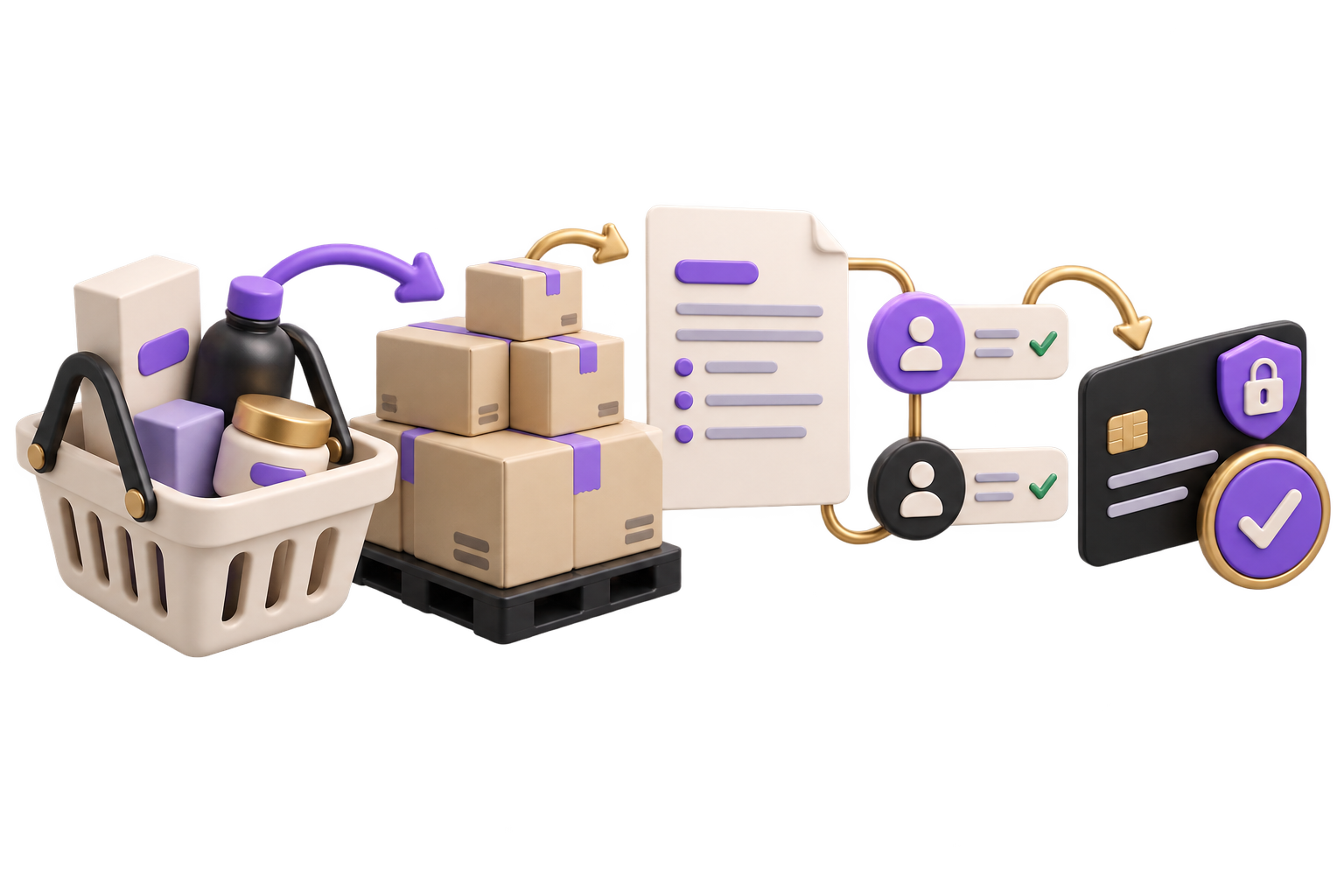
Map the wholesale order path
01 / What we build
Model qualities, materials, designs, shades, widths, units, packs, minimum quantities, media and documents as approved product fields.
Design account approval, catalogue visibility, samples, enquiries, quotations, repeat orders and accepted-order states with named owners.
Connect authorised availability, fulfilment updates, documents, returns and failed-sync handling without making the storefront the ledger by default.
City context, honestly stated
We collaborate remotely with Surat teams through catalogue reviews, order-flow workshops and test scenarios; GreyBath does not claim a Surat office.
Separate fabric, weave, colour, design, width, unit, roll, pack and availability fields without hiding meaningful differences.
Link samples, requested qualities, shades, quantities, quote validity and buyer decisions to the responsible follow-up owner.
Show availability or lead-time language only from an authorised source with documented update and exception ownership.
02 / Where it fits
These textile and wholesale examples are possible use cases, not claimed clients or automatic market facts. Actual products, buyers and operating rules determine scope.
Present approved qualities, constructions, finishes, shades, units and documents without flattening important product differences.
Control account access, pack quantities, price visibility, quotations, repeat orders and sales follow-up.
Connect collections and variants to availability, sampling, order requirements and fulfilment information.
Apply the same governed catalogue and account principles when product attributes and commercial rules differ.
03 / How we work
Use representative products and current terms to define attributes, buyer groups, documents and ownership.
Test discovery, samples, quotations, account approval and repeat ordering with realistic scenarios.
Connect approved systems; verify updates, payment or quote states, dispatch, failures, permissions and handover.
Catalogue depth, product terminology, buyer access, pricing authority, samples, quotation states, stock source, payments, fulfilment and integrations shape the proposal.
Discuss your projectQualities, shades, dimensions, units, packs, images, documents and migration-ready source data.
Account access, price visibility, minimum quantities, samples, quotations, payments, taxes and approval authority.
Inventory source, update timing, reservations, dispatch, returns, integrations, failures and post-launch ownership.
Yes, when account groups, visibility and price authority are defined. The platform should not expose negotiated or restricted terms to unauthorised visitors.
Yes. Enquiry, sample, quote and checkout can remain distinct states, with clear ownership and an explicit point where an accepted order enters the operational system.
Attributes and variant relationships are modelled from representative data supplied by your team. Photography, naming and tolerance wording must be approved before publication.
Yes, after confirming APIs or import methods, source authority, update frequency, reservation rules and recovery steps. Licences and vendor changes are scoped separately.
Yes, when validated buyers need them. Your team supplies or approves translations and product terminology; scope includes switching, layout testing and maintenance ownership.
Wholesale follow-up is scattered across catalogues and messages?