Research and journey map
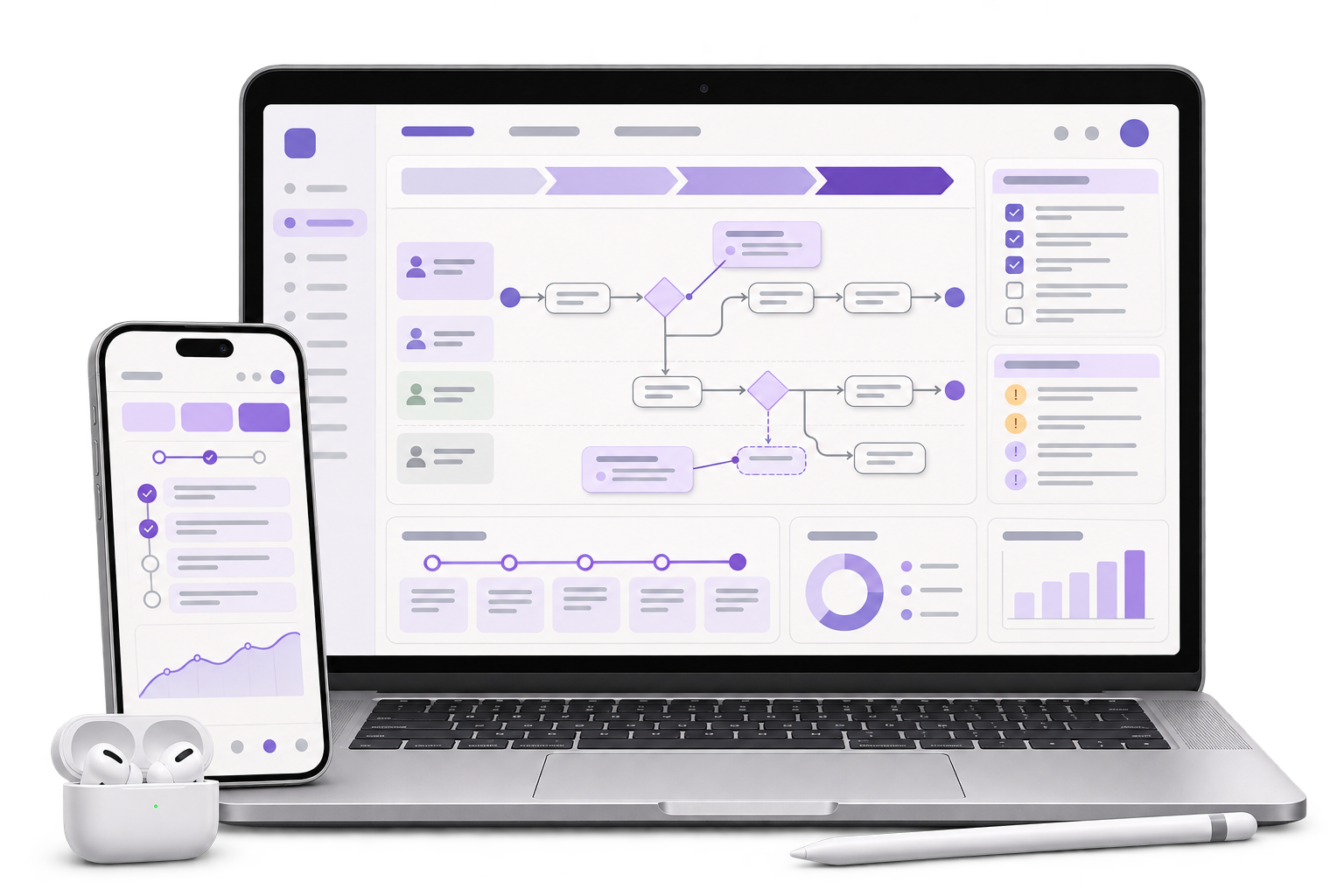
Interview the people who submit, review and support the workflow. Record tasks, handoffs and where staff leave the product to resolve a case.

Make onboarding and approval screens easier to use when decisions carry business consequences. We turn the steps, permissions and exceptions in your workflow into a prototype that users can test.
Explore what we build
01 / What we build
Interview the people who submit, review and support the workflow. Record tasks, handoffs and where staff leave the product to resolve a case.
Show the customer and reviewer paths, including pending, returned and resubmitted states. Prototype the screen at the moment an approval needs a decision.
Specify focus order, field instructions and feedback. Document components, variants and interaction rules for the development team.
City context, honestly stated
For projects in Mumbai, for a financial services team in Bandra Kurla Complex, customer service staff and reviewers can need different views of the same case. A design workshop can map the handoff before a new interface reaches production. GreyBath delivers through remote workshops, reviews and handover.
Imagine a Mumbai business lender updating its document review tool. A customer uploads a file from a phone and one page is unreadable. The reviewer can request a replacement for that specific page, assign a reason and set a due date. The customer sees which action remains open and can submit a replacement from the same case. The reviewer can see the original and revised versions with dates. In a prototype test, each participant should complete their step and explain what happens next without asking a colleague. The team records the mistakes and adjusts the design before building it.
Where it fits
Bring the people who use, review and maintain the first release into the scope discussion.
Review onboarding, case status and document requests with the staff who operate them.
Reduce ambiguity in workflows that need approval, escalation or exception handling.
How we work
Follow recent cases with operators and list what each role needs to know at handoff.
Design both the standard case and one exception. Give each user a task they can complete in the prototype.
Use the test observations to revise screens, then record the states and acceptance criteria for engineering.
The proposal sets the first workflow, delivery responsibilities and the evidence needed before rollout.
Discuss your projectAgree which roles can join testing and which redacted examples can be shared before the design work starts.
Define the tasks, devices and accessibility expectations for the first release. Agree whether implementation is included.
Yes. A focused brief can cover a particular workflow, with its entry and exit states mapped to the rest of the product.
Yes. We review its components and record any new states the workflow needs.
Yes. Redacted or synthetic cases can reproduce relevant decisions and exceptions without exposing customer records.
Start with one workflow